Thermally expandable microsphere/ Physical Foaming Agent
Thermally expanded microsphereshttps://youtube.com/shorts/qWPilALwPG8?si=9GHeZ95mcJiL47Cd serve as ideal lightweight fillers for plastics and rubber, offering excellent resilience. They are used in the extrusion or injection molding foaming of thermoplastics such as PE, PP, PVC, PET, TPR, TPU, and other thermoplastic materials during extrusion or injection molding foaming processes. They enhance product volume, improve insulation properties, reduce density, and boost thermal resistance and compression strength. These microspheres find extensive industrial applications in wine bottle stoppers, automotive components, lightweight clay, foamed shoe materials, foamed rubber, sealing strips, cables, tires, artificial marble, porous ceramics, and emulsion explosives.
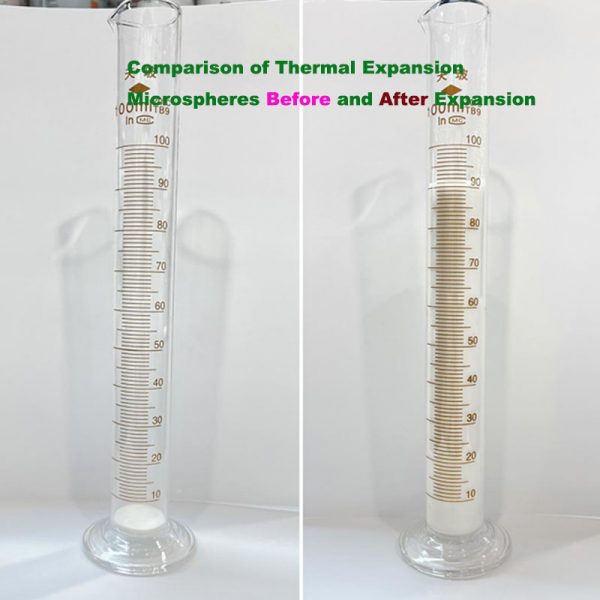
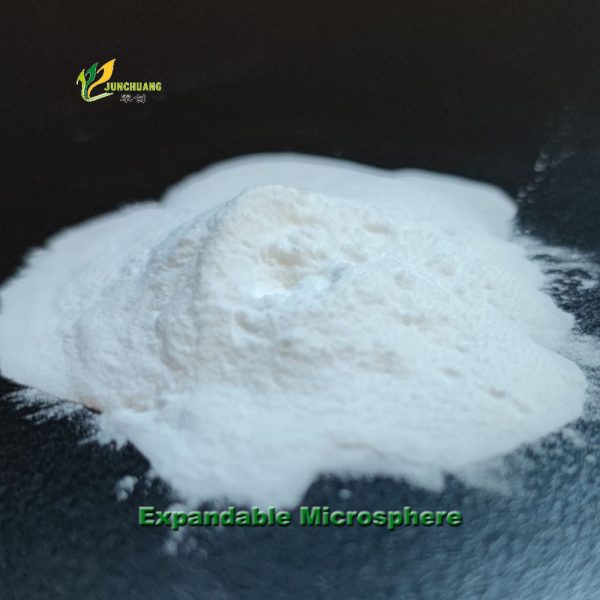
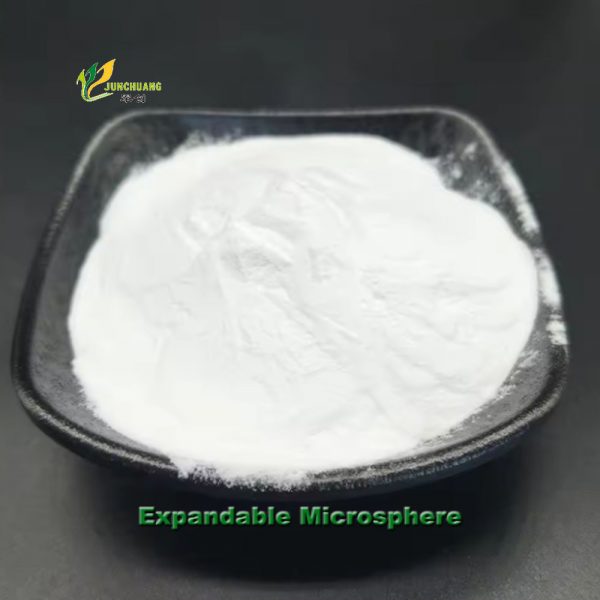
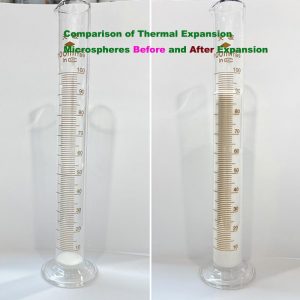
Thermally expandable microspheres, also known as thermoplastic expandable microspheres, are a type of thermally expandable microcapsule. featuring a core-shell structure where a thermoplastic polymer shell encapsulates a low-boiling-point solvent (liquid alkane gas or other compounds). Typically ranging from 10 to 50μm in diameter, these microspheres rapidly expand to dozens of times their original volume upon heating. After cooling, they permanently retain their expanded size without shrinking. As an ideal lightweight filler and physical foaming agent, thermally expandable microspheres have found extensive applications in coatings and printing, the foam industry, textiles, construction, automotive manufacturing, aerospace, and other fields.
Thermal expansion microspheres can be classified based on their maximum expansion temperature as follows:
Low-temperature expansion type: Tmax < 110°C
Medium-temperature expansion type: Tmax 110–160°C
High-temperature expansion type: Tmax 160–220°C
Ultra-high-temperature expansion type: Tmax > 220°C
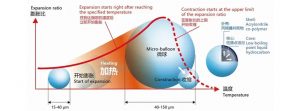
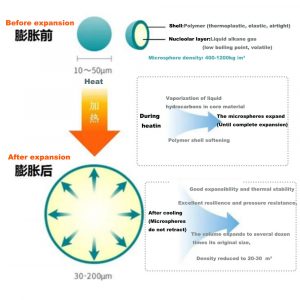
Expansion Principle: At room temperature, the microsphere shell remains rigid. When heated, the liquid hydrocarbon gradually vaporizes as temperature rises, increasing internal pressure. Upon reaching the polymer shell’s glass transition temperature, the shell softens. Driven by the pressure differential between interior and exterior, the microsphere begins to expand until equilibrium pressure is achieved, halting expansion at maximum foaming state. Continued heating reduces the mechanical strength of the polymer shell, causing the microsphere to shrink and rupture, releasing the gas contained within. (Image source: Sekisui Chemical Advancell EM)
Thermal Expansion Microsphere Properties
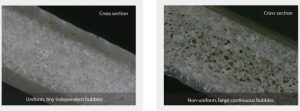
SEM Comparison of Foaming Effects Between Thermal Expansion Microsphere Foaming Agent and Chemical Foaming Agent
01 Excellent Mechanical Properties
The absence of open cells eliminates the drawbacks of conventional foaming agents, such as uneven cell distribution, cell rupture, and poor cell resilience. Its complete spherical structure ensures superior mechanical performance.
02 Superior Elasticity
The thermoplastic shell exhibits outstanding pressure resistance, withstanding up to 300 kg/cm² pressure. Its excellent resilience allows it to endure repeated pressure cycles without rupture.
03 Superior Foaming Performance
Expands to 40-80 times original volume upon foaming. Each microsphere possesses an independent closed-cell structure, maintaining a fully sealed form after expansion. Uniform pore size distribution ensures consistent foaming performance.
04 Environmental Performance
Conventional foaming agents may emit odors or residual volatiles during use and after curing. Polymer microspheres are non-toxic and pollution-free, offering enhanced safety. They serve as eco-friendly foaming agents suitable for high-end and high-value-added products.
05 Insulation Properties
Upon thermal expansion, microspheres form air-filled sealed cavities with excellent insulation. When incorporated into polyurethane, phenolic resins, coatings, and similar materials, they deliver superior thermal insulation while also providing soundproofing, shock absorption, flame retardancy, and electrical insulation.
Application Introduction
01 Three-Dimensional Pattern Printing
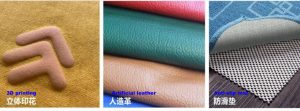
Due to the excellent foaming properties of thermal expansion microspheres, controlled foaming can be achieved by adjusting the microsphere particle size and expansion temperature when incorporated into printing inks or coatings. Different particle sizes yield distinct surface appearances and tactile sensations, enabling three-dimensional effects, unique velvety textures, suede-like finishes, and matte surfaces. These applications are widely used in ink printing, textile printing and dyeing, Braille embossing, wallpaper, leather, and other industrial applications. They can also be incorporated into anti-slip agents and applied to surfaces like paper, non-woven fabrics, and textiles to produce anti-slip mats, carpets, corrugated cardboard, and similar products.
02 Lightweight Materials
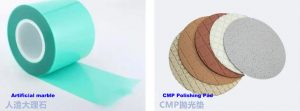
Thermally expanded microspheres serve as ideal lightweight fillers for plastics and rubber, offering excellent resilience. They are used in the extrusion or injection molding foaming of thermoplastics such as PE, PP, PVC, PET, TPR, TPU, and other thermoplastic materials during extrusion or injection molding foaming processes. They enhance product volume, improve insulation properties, reduce density, and boost thermal resistance and compression strength. These microspheres are extensively utilized in industrial production for wine bottle stoppers, automotive components, lightweight clay, foamed shoe materials, foamed rubber, sealing strips, cables, tires, artificial marble, porous ceramics, and emulsion explosives.

03 Functional Coatings
Thermally expanded microspheres can be incorporated into corresponding coatings as a protective layer, imparting elasticity, resilience, impact resistance, and other specialized properties to the product. For instance, they can be used in automotive underbody armor coatings, reducing vehicle chassis weight by 50% while enhancing corrosion resistance, minimizing noise, significantly lowering fuel consumption, and reducing costs. They are also applicable in leather coatings, garment linings, automotive interiors, crack-resistant agents, and fire-resistant coatings.

04 Other Applications
Adhesives/Thermally Degradable Tape: Many applications require bonding and unbonding different materials. Incorporating thermally expandable polymer microspheres into adhesives enables thermally degradable bonding at component joints. Thermally degradable tape maintains adhesion at room temperature but releases upon heating, allowing easy peeling for rapid disassembly without damaging components. It is widely used in electronics manufacturing.
Semiconductor CMP Polishing Pads: Thermally expanded microspheres can be used to manufacture CMP polishing pads. CMP technology is a process that achieves the required surface flatness of the material being polished through the combined action of chemical and mechanical forces, with the polishing pad serving as a critical component.
Market Overview
According to research by YH Research, the global market size for expandable microspheres reached approximately 3.6 billion yuan in 2023. It is projected to maintain steady growth, reaching nearly 6.7 billion yuan by 2030, with a compound annual growth rate (CAGR) of 8.7%.
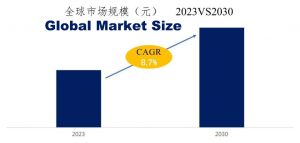
Data Source: YH Research
Key global manufacturers of thermal expansion microspheres include Nouryon, Matsumoto Yushi-Seiyaku, Kureha, Sekisui Chemical, and Kumyang. For a long time, the thermal expansion microsphere market has been dominated by foreign companies, with the top five global manufacturers holding approximately 80% of the market share. Japan is the largest production region, while the Asia-Pacific region represents the largest consumption market. In terms of product types, foaming agents hold a dominant position, accounting for about 64% of the market share.